

In many office, hotel, and commercial projects, HVAC systems are designed strictly according to calculated capacity and airflow. However, once the system is put into operation, occupants often still report issues such as:
-
Some areas being too cold while others are too hot
-
Direct airflow causing discomfort
-
Working spaces failing to achieve the expected level of thermal comfort
The root cause of these problems often does not lie in equipment capacity, but in how air is distributed within the space.
Calculation ≠ Real Experience
Traditional calculation methods can ensure:
-
Total airflow rate
-
Overall cooling and heating load of the space
However, they cannot accurately reflect:
-
Actual airflow paths inside the room
-
The presence of dead zones or short-circuiting airflow
-
Real operating conditions in the occupied zone
CFD – Making the Invisible Visible
CFD (Computational Fluid Dynamics) simulation makes it possible to:
-
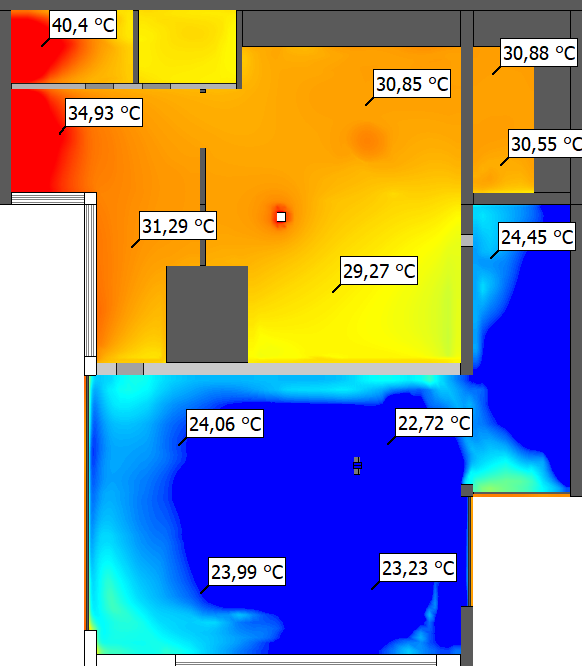
Visualize temperature distribution and air velocity throughout the entire space
-
Directly evaluate thermal comfort conditions within the occupied zone
-
Identify potential issues early, before construction
CFD does not replace standards; instead, it provides clear evidence that the HVAC design truly meets thermal comfort requirements under real operating conditions.
👉 Learn more about SAO’s CFD-based Thermal Comfort Simulation service.
Tags


Related news
How is a thermal comfort CFD project carried out?
An effective CFD analysis is not simply about running a simulation. It requires a clear workflow closely aligned with HVAC...
View detail
When Should CFD Be Applied in HVAC Design?
Not every project requires CFD (Computational Fluid Dynamics) analysis.However, CFD is highly recommended in the following situations: Projects with high...
View detail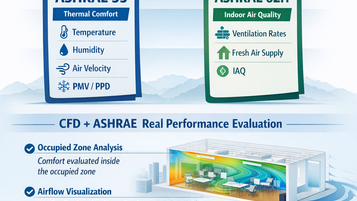
Why ASHRAE 55 & 62.1 Matter in HVAC Comfort Evaluation
In Vietnam, HVAC design is required to comply with national standards such as ASHRAE, QCVN, and TCVN. However, current Vietnamese...
View detail