

Many people believe that CFD is used only to:
-
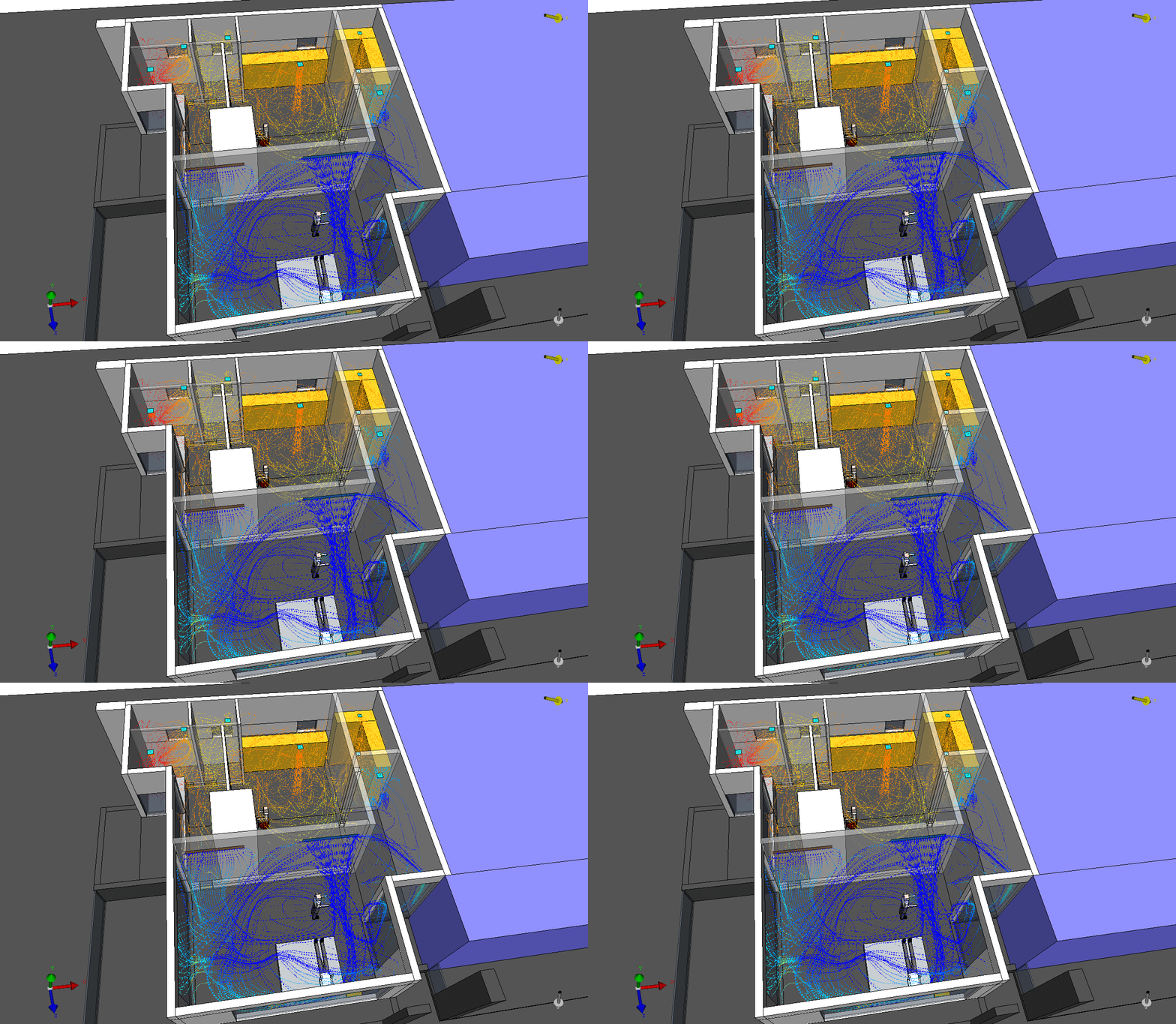
Create colorful images for reports
-
Provide visual illustrations for clients
In reality, when applied correctly, CFD is a powerful engineering tool that helps reduce HVAC operational risks.
Issues CFD Can Identify Early
CFD enables the early detection of risks that are difficult to capture using traditional calculation methods:
-
Fresh air short-circuiting without reaching the occupied zone
-
High air velocity causing draft discomfort
-
Uneven temperature distribution
-
Inappropriate diffuser and return air layout for the space geometry
What Defines a Proper CFD Analysis?
A meaningful CFD analysis requires:
-
Clear evaluation criteria linked to standards (ASHRAE 55, ASHRAE 62.1)
-
Focused assessment within the occupied zone
-
Conclusions on compliance with standards, not just visual results
At SAO, CFD is used as a technical verification tool, not merely for illustration purposes.
👉 Discover how SAO performs CFD analysis in compliance with ASHRAE standards.
Tags


