

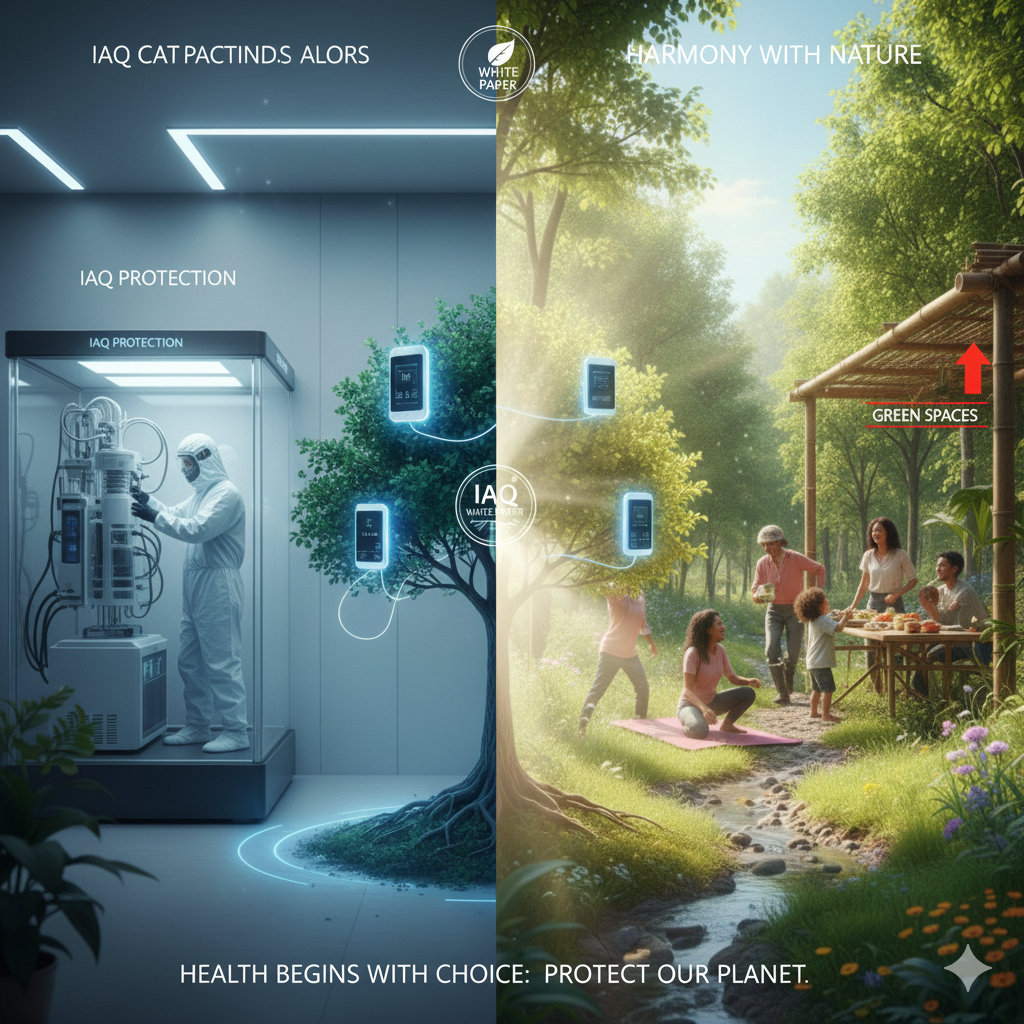
According to current documents, including IAQ white papers, one clear reality emerges:
there is still no unified global standard for indoor air quality (IAQ).
Existing guidelines vary widely across countries and organizations, leaving governments, system integrators, building owners, and communities without clear, actionable reference points.
However, the more fundamental question is not simply the lack of standards.
It is why we have become so dependent on standards and devices just to “fix” the air we breathe.
The root of the problem does not lie indoors, but in the natural environment itself.
Excessive resource extraction, overconsumption, and uncontrolled energy use degrade the environment, pollute outdoor air, and inevitably deteriorate indoor air quality.
As a result, we respond by creating more standards, more equipment, and more systems to manage the consequences of our own actions.
From another perspective, it is difficult to ignore that many IAQ standards and solutions today are closely tied to commercial interests.
The mass production of sensors, air purifiers, and advanced HVAC systems consumes resources, energy, and generates emissions throughout their life cycles.
If approached uncritically, solutions intended to protect human health may paradoxically contribute to further environmental degradation.
This does not mean IAQ standards are wrong.
Standards are necessary, especially to protect vulnerable populations and to raise public awareness.
But standards should be understood as tools, not as the ultimate goal.
The true goal must be a way of living in harmony with nature:
knowing sufficiency, reducing unnecessary consumption, respecting natural resources, and prioritizing natural ventilation, green spaces, and sustainable design.
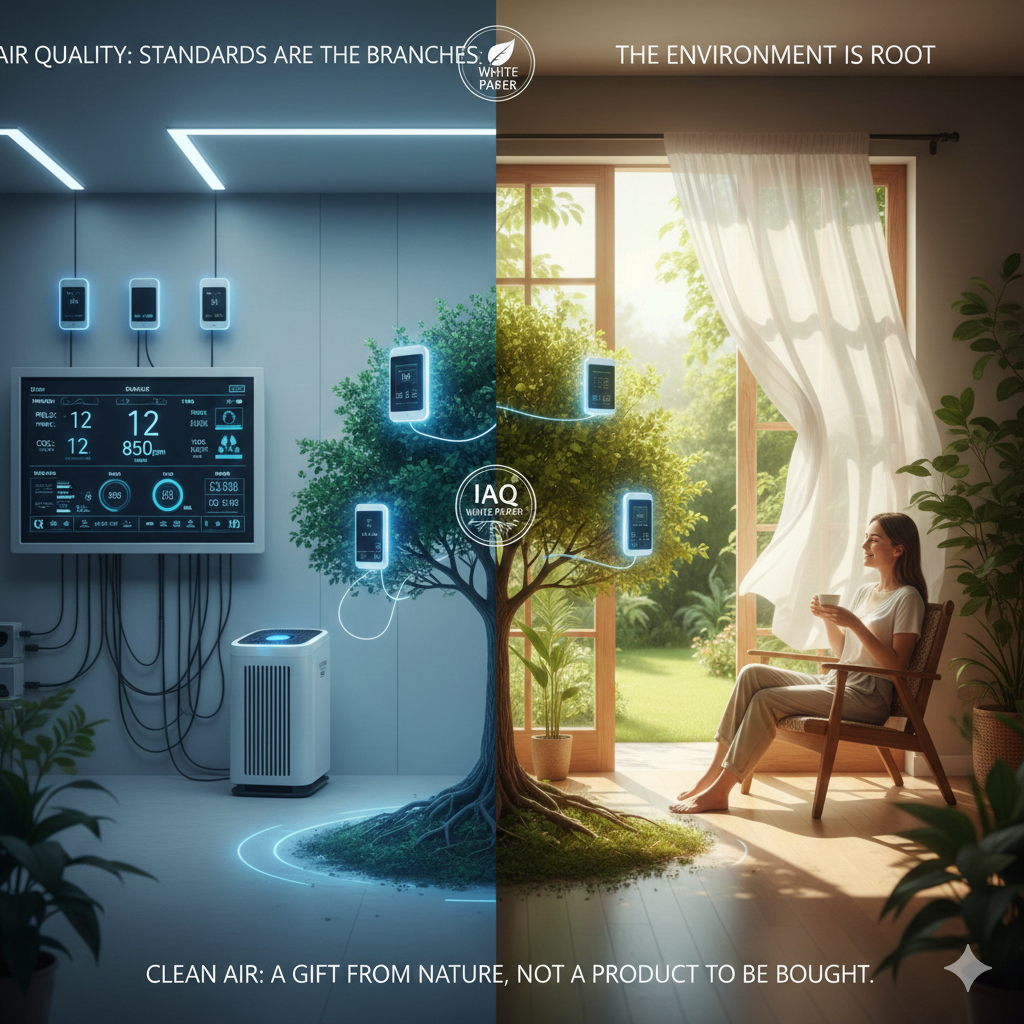
When the environment is protected, clean air becomes a natural condition, not something that must constantly be measured, controlled, and purchased.
Ultimately, loving and protecting the environment does not begin with sensors or standards.
It begins with human awareness and everyday choices.
When the environment is truly cared for, air quality ceases to be a technological race and returns to its essence:
clean air as a gift of nature, not a product bought at any cost.
Tags


