
Indoor Air Quality in Modern Homes
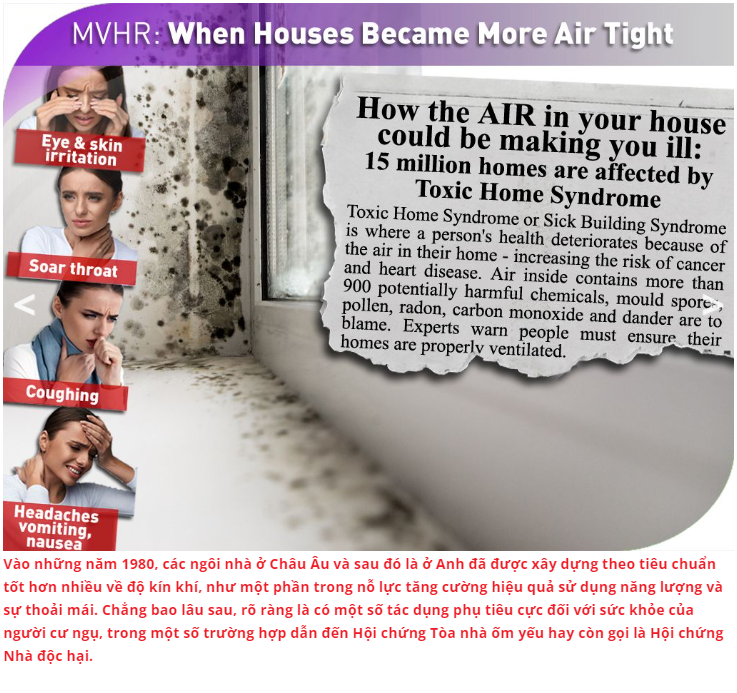
Over the past few decades, homes have become more comfortable and energy-efficient due to increasing standards for insulation and airtightness.
However, this has also led to concerns about the indoor air quality (IAQ) of modern and renovated homes.
Here are some reasons why:
- Increased airtightness: Modern homes are often much more airtight than older homes. This can lead to a build-up of indoor pollutants, such as particulate matter, formaldehyde, and radon.
- Poor ventilation: Many modern homes have ventilation systems that are not adequate to provide enough fresh air to the home.
- Building materials: Some building materials, such as gypsum plaster, can absorb and release pollutants into the air.
A recent study found that the average IAQ in modern homes with natural ventilation through trickle vents was alarmingly poor.
Since most of us spend a lot of time indoors, long-term exposure to polluted and oxygen-depleted air can have negative health effects, including:
- Respiratory diseases: Bronchitis, asthma, and lung infections.
- Cardiovascular diseases: Heart disease, stroke, and high blood pressure.
- Cancer: Lung cancer, throat cancer, and laryngeal cancer.
Tags


Related news
How is a thermal comfort CFD project carried out?
An effective CFD analysis is not simply about running a simulation. It requires a clear workflow closely aligned with HVAC...
View detail
When Should CFD Be Applied in HVAC Design?
Not every project requires CFD (Computational Fluid Dynamics) analysis.However, CFD is highly recommended in the following situations: Projects with high...
View detail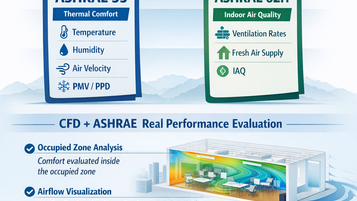
Why ASHRAE 55 & 62.1 Matter in HVAC Comfort Evaluation
In Vietnam, HVAC design is required to comply with national standards such as ASHRAE, QCVN, and TCVN. However, current Vietnamese...
View detail